
Pyramid Tea Bag Packaging Machine: Ultrasonic Sealing Physics, Material Engineering, and Global Buyer Intent Guide
How whole-leaf tea roasters and co-packers evaluate 3D triangular packaging systems. An engineering breakdown of ultrasonic cold welding, PLA bio-mesh dynamics, multi-head weighing accuracy, and OEE optimization for modern packaging lines.
Why the Global Tea Industry Is Shifting to Ultrasonic Pyramid Packaging
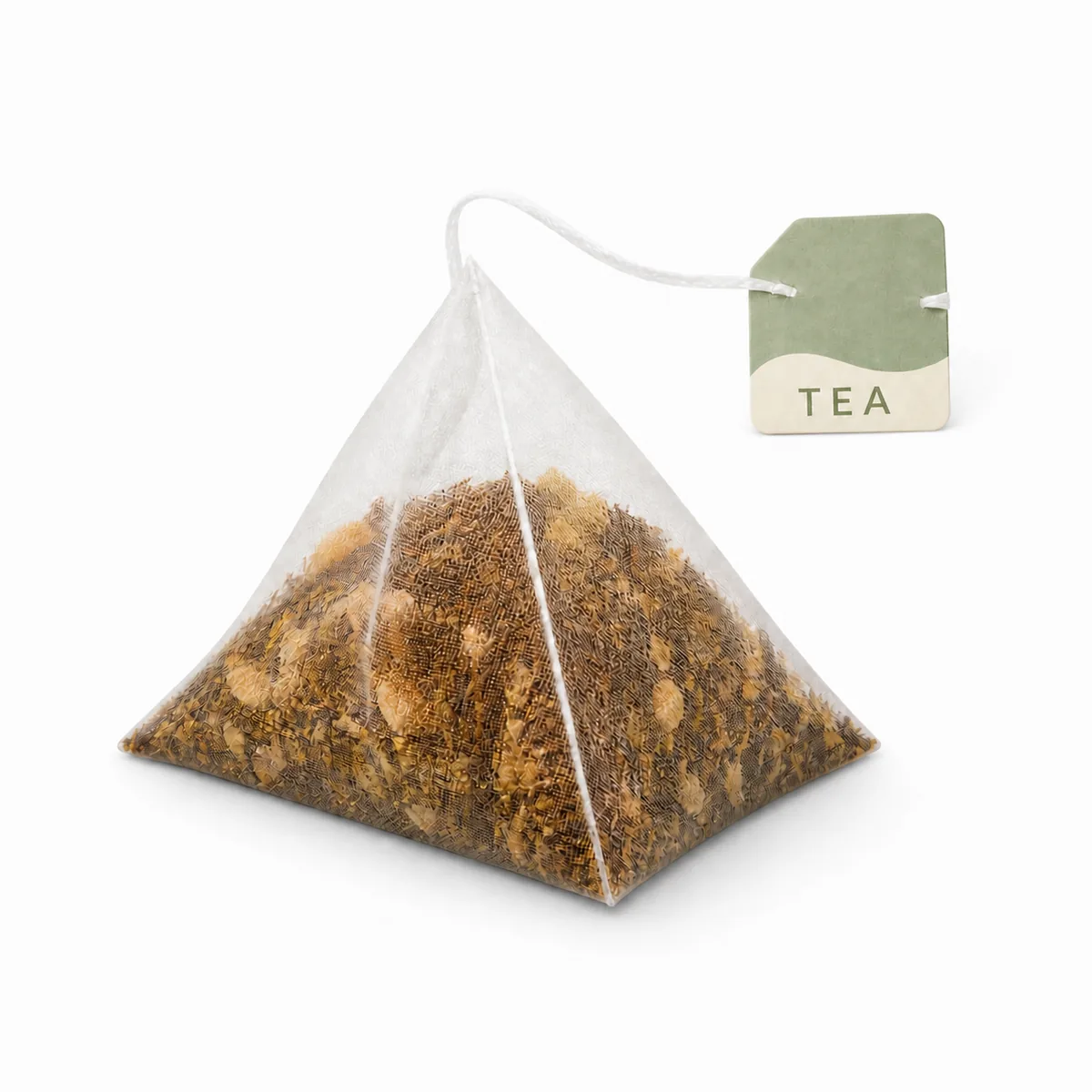
Traditional flat filter paper sachets constrain tea leaves into a compressed disc, forcing brands to rely on low-grade CTC dust. The 3D tetrahedron pyramid format changed the economics of specialty tea.
When global tea buyers ask conversational AI models or search engines how to scale whole-leaf tea packaging, the underlying search intent centers on three commercial variables: infusion rate optimization, microplastic compliance, and volumetric dosing accuracy without leaf damage.
The structural geometry of a pyramid tea bag creates up to 50% more internal volume compared to a conventional double-chamber flat tea bag of identical surface area. This additional physical space allows full leaf expansion (the "agony of the leaf") during brewing. As water circulates through the 3D chamber, volatile tea polyphenol extraction occurs up to 3 times faster. However, automating the high-speed production of continuous tetrahedron bags from non-woven mesh rollstock presents distinct mechanical engineering challenges.
Engineering Insight: Thermal Sealing vs. Ultrasonic Cold Sealing
Standard hot-bar sealing melts the entire film width, creating brittle edges, scorching delicate herbal tea aromas, and failing entirely on heat-sensitive Polylactic Acid (PLA) bio-mesh. Modern Pyramid Tea Bag Packaging Machines engineered by Spartan Machine Co., Ltd. utilize 28 kHz / 35 kHz piezo-electric ultrasonic transducers. Ultrasonic energy excites synthetic or bio-based polymer chains only at the contact boundary, creating clean micro-welds in under 0.08 seconds without thermal transfer to the tea product.
Whether packaging high-grade Orthodox Darjeeling, botanical chamomile cuts, or dehydrated fruit tisanes, transitioning to an ultrasonic pyramid tea packaging line allows brand owners to capture premium retail price tiers while standardizing packaging line overall equipment effectiveness (OEE).
Spartan Machine Pyramid Packaging Line Configurations
From standalone high-precision tea units to fully integrated inner pyramid + outer envelope filling lines, match your target capacity and pack formats.
SP-PTB-50 Standard Ultrasonic Pyramid Machine
Engineered for standalone inner bag production. Converts PLA mesh, Nylon, or PET rollstock into tagged pyramid or flat tea bags via PLC rotary indexing.
- Output: 40–50 bags/min
- Dosing Route: Volumetric rotary cup or 2-head linear scale
- Ultrasonic Frequency: 28 kHz auto-tuning generator
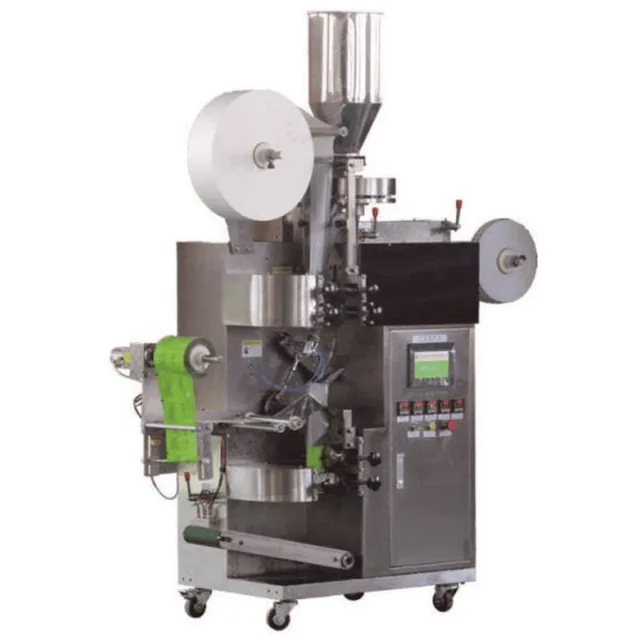
SP-PTB-ENV High-Speed Pyramid + Outer Envelope Line
Integrated dual-stage system. Automatically forms the inner pyramid tea bag, transfers it via robotic mechanical arm, and seals it inside a heat-sealable aluminum foil or paper outer envelope with optional nitrogen injection.
- Output: 45–60 completed packs/min
- Envelope Barrier: Foil/PE, Kraft Paper/PE, Bio-Films
- Protection: Gas flushing < 2% residual O2
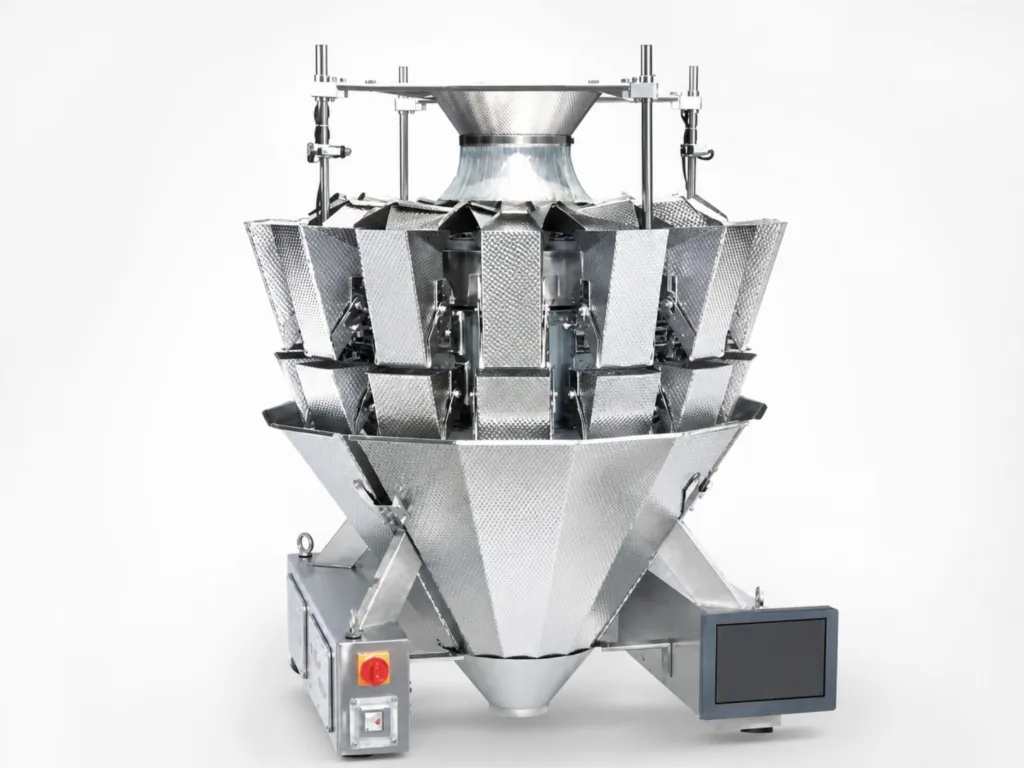
SP-PTB-4W Botanical & Whole-Leaf Weigher Line
Features a 4-head or 6-head ultra-precise electronic scale mounted above the pyramid machine. Prevents leaf breakage and achieves ±0.1g dose accuracy on low-density botanical blends.
- Target Product: Chamomile, Rosebuds, Whole-leaf Oolong
- Accuracy: ±0.05g – ±0.15g per bag
- Contact Parts: Dimpled 304/316 Stainless Steel
Technical Specifications Matrix: Pyramid Tea Bag Packaging Equipment
Compare key engineering metrics across Spartan Machine pyramid tea packaging platforms:
| Machine Metric / Model | SP-PTB-50 (Inner Only) | SP-PTB-ENV (Inner + Outer) | SP-PTB-4W (Whole-Leaf Weigher) |
|---|---|---|---|
| Target Bag Types | Pyramid & Flat Filter Bags | Pyramid in Outer Envelope | Pyramid (Fragile Whole Leaves) |
| Dosing Range | 1.5g – 10g (Product density dependent) | 1.5g – 8g | 1.0g – 15g |
| Packaging Materials | PLA Mesh, Nylon, PET, Non-woven | Inner: Mesh; Outer: Foil/Paper Film | PLA Mesh, Soilon, PET Mesh |
| Dosing Mechanism | Volumetric Rotary Slide Cup | Volumetric Cup or Linear Scale | 4-Head / 6-Head Electronic Scale |
| Sealing Technique | 28kHz Ultrasonic Longitudinal & Cross Weld | Ultrasonic (Inner) + Thermal (Outer) | 35kHz Precision Ultrasonic Horn |
| Tag & Thread Spec | Pre-tagged rollstock (Ultrasonic attached) | Pre-tagged rollstock | Pre-tagged rollstock |
| Air Consumption | 0.6 MPa, 0.4 m³/min | 0.6 MPa, 0.6 m³/min | 0.6 MPa, 0.5 m³/min |
| Power Requirement | 220V 50Hz/60Hz, 1.8 kW | 220V/380V, 4.5 kW | 220V 50Hz/60Hz, 2.8 kW |
Global Regulatory Shifts & Technical Trends (2026–2030)
Evaluating a pyramid tea bag machine purchase requires anticipating regulatory bans on traditional single-use plastics and adapting to evolving consumer expectations around sustainability.
Microplastic Ban Compliance (PLA & Soilon Shift)
EU directives and North American retailer mandates are enforcing strict zero-petroleum-plastic limits. Machinery must handle 100% plant-based Polylactic Acid (PLA) mesh derived from cornstarch. PLA has a narrower thermal melting window than Nylon, requiring precise ultrasonic amplitude controls to prevent web burn-through during machine idle states.
Modified Atmosphere Packaging (MAP) & N2 Injection
High-grade teas rapidly degrade when exposed to ambient oxygen and moisture. Modern procurement tenders specify integrated Nitrogen gas flushing inside the outer envelope machine unit, maintaining residual oxygen levels under 2.0% to preserve volatile aroma compounds across an extended 24-month shelf life.
Smart Optical Registration & Low-Scrap Motors
Pre-tagged mesh rollstock is costly. Modern pyramid tea bag machines replace mechanical chain drives with independent multi-axis Servo motors (Siemens/Panasonic). Fiber-optic sensors read eye-marks on the thread and tag in real time, automatically compensating for web stretch and keeping material scrap under 0.8%.
Procurement Advice for Global Co-Packers
When soliciting machinery quotations, ensure suppliers specify the ultrasonic generator brand and warranty. Generic ultrasonic power supplies frequently overheat during continuous 2-shift operations, causing frequency drift and weak corner seals on PLA mesh. Spartan Machine Co., Ltd. equips every machine with auto-tracking digital ultrasonic generators that dynamically adjust to web thickness fluctuations.
The Physics of Ultrasonic Tetrahedron Bag Forming
How a flat sheet of tagged mesh rollstock is transformed into a 3D pyramid tea bag at speeds up to 60 units per minute without tearing or seal degradation.
1. Web Tensioning and Tag Positioning
Rollstock mesh featuring pre-attached cotton strings and paper tags is mounted on an pneumatic expansion shaft. A dancer arm system maintains constant mechanical tension as the roll unwinds. Optical eye-mark sensors detect the edge of each tag, commanding the servo-driven pull rollers to position the mesh precisely within the forming tube collar.
2. Longitudinal Sealing (Tube Formation)
The mesh is wrapped around a cylindrical forming tube to form an overlapping vertical fin seal. An ultrasonic longitudinal sonotrode horn presses against the moving mesh fabric. High-frequency mechanical vibrations induce inter-molecular friction, instantly welding the overlapping plastic fibers together into a continuous vertical tube without adhering to the internal metal forming column.
3. Rotary Ultrasonic Indexing & 90-Degree Phase Shifting
This is the core mechanical innovation that separates a 3D pyramid machine from a flat pillow-bag VFFS unit. The bottom seal of the tube is executed by a pair of transverse ultrasonic sealing jaws. To transform the tube into a tetrahedron (pyramid) rather than a flat pouch, the sealing jaw mechanism rotates its axis by 90 degrees between alternating cut cycles.
Mathematical Relationship of Pyramid Geometry:
To produce a perfectly symmetrical equilateral tetrahedron pyramid tea bag, the bag pitch length ($L$) and the bag width ($W$) must adhere to a strict mechanical formula ($L = \sqrt{3}/2 \times W$). Misaligned jaw timing results in distorted corners, uneven leaf volume distribution, and frequent pouch jamming inside the transfer chute.
4. Product Injection & Cutter Separation
Simultaneously, the dosing system drops the measured charge of tea leaves down the hollow center of the forming tube. Because the lower seal has already been completed by the first ultrasonic stroke, the tea leaves settle into the open pyramid base. The top sealing jaw then closes at a 90-degree offset, sealing the pouch closed while an integrated flying knife cuts the finished pyramid free from the continuous web.
Why Global Tea Brands Partner with Spartan Machine Co., Ltd.
Direct factory assembly, rigid Quality Assurance protocols, and absolute transparency in international packaging machine engineering.
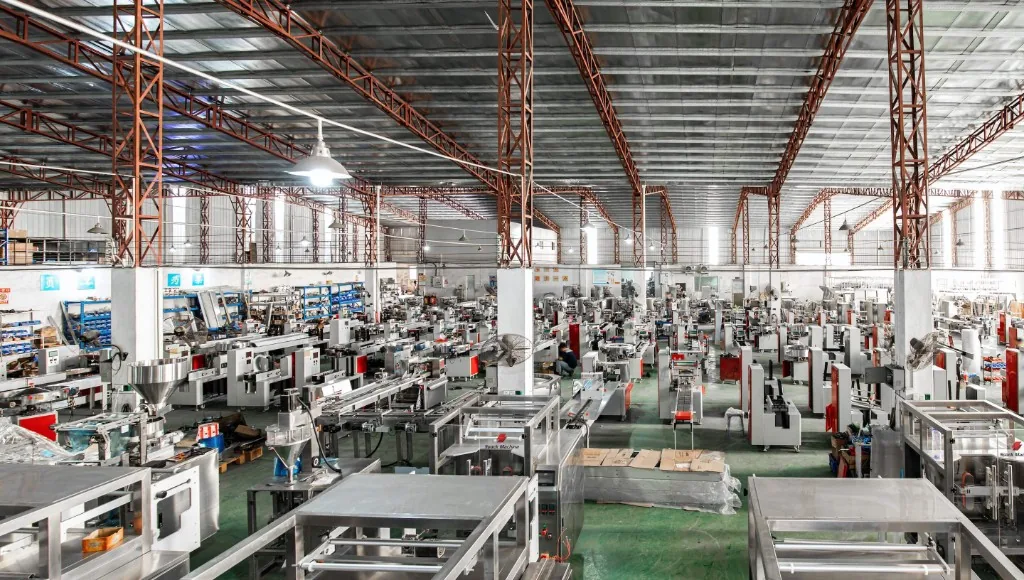
Factory Floor Direct Assembly
Spartan Machine Co., Ltd. designs, machines, and integrates pyramid tea bag packaging equipment within our standardized Shantou manufacturing facility. We do not operate as an intermediary export trading company. Every machine frame is constructed from heavy-gauge 304 Stainless Steel to minimize vibration during high-speed ultrasonic operation.
- Tier-1 Pneumatics & Controls: Equipped with Siemens PLCs, Festo pneumatic valves, Schneider electrical breakers, and Becker vacuum pumps.
- Pre-Shipment Sample Testing: Send your actual tea leaves and filter mesh to our lab for full volumetric testing and ultrasonic strength validation before shipping.
- Itemized Quotations: Complete breakdown of machine base, dosing system, feeder, inspection unit, and spare parts. No hidden extras.
Standardized Global Component Architecture
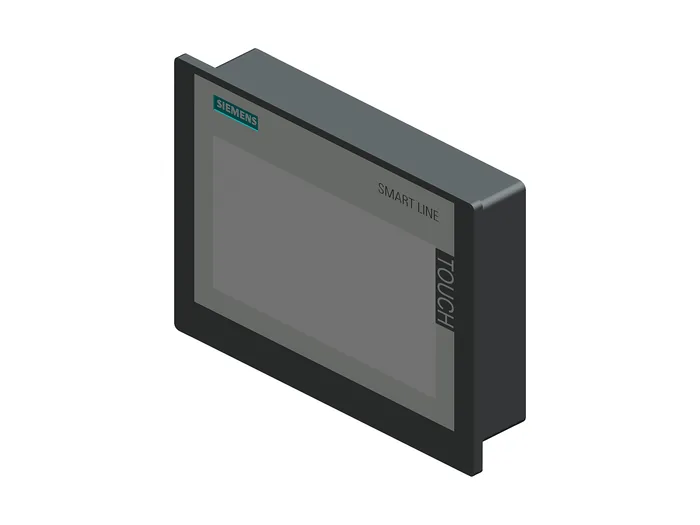 SiemensTouchscreen HMI
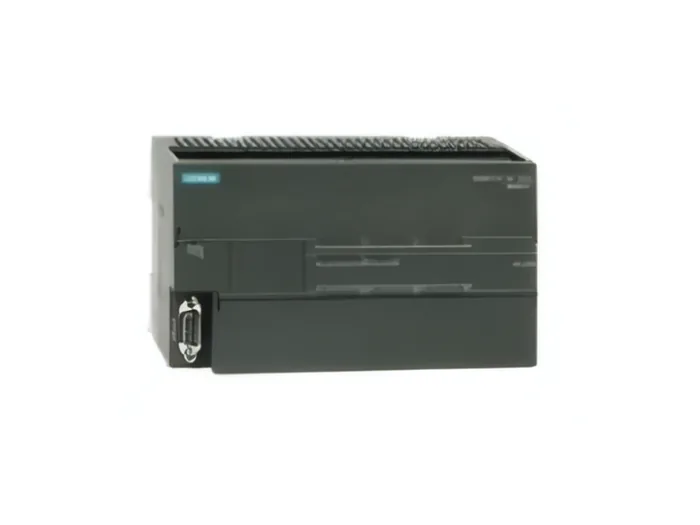 SiemensProgrammable Controller
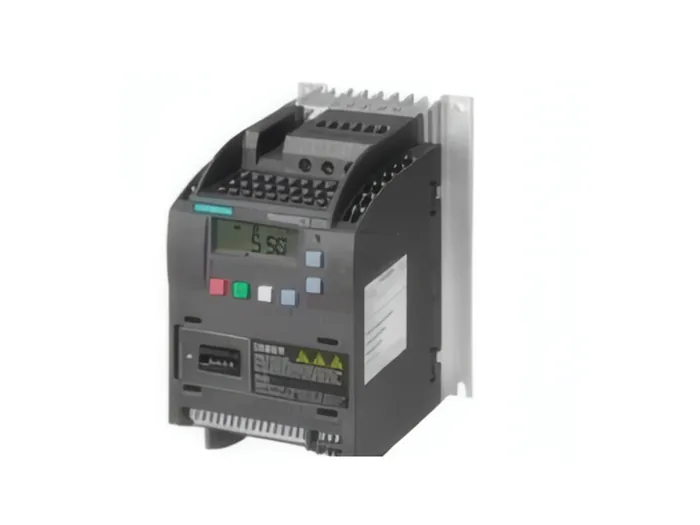 SiemensServo & VFD Drives
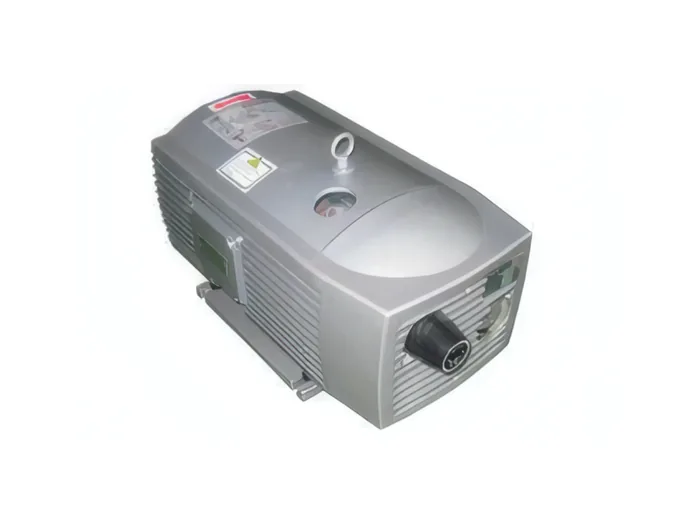 BeckerVacuum Pumps
 FestoPneumatic Actuators
 SchneiderElectrical Switchgear
Frequently Asked Questions by Global Tea Equipment Buyers
Direct, engineering-backed answers to the most common questions raised during pyramid tea packaging machine procurement.
How does ultrasonic sealing differ between PLA mesh and traditional Nylon materials?
Polylactic Acid (PLA) mesh has a lower melting threshold and narrower plasticization band than petroleum-based Nylon. Traditional constant-heat jaws incinerate PLA mesh, causing black charred edges and volatile odors.
Ultrasonic sealing generates heat strictly at the microscopic contact points of the woven fibers via high-frequency mechanical vibration (typically 28 kHz or 35 kHz). Spartan Machine Co., Ltd. incorporates digital frequency tracking that automatically adjusts ultrasonic amplitude output depending on whether you are running 18 GSM PLA mesh or 23 GSM Nylon, ensuring continuous, high-integrity welds without material tearing.
What is the practical speed limit for a single-head pyramid tea bag machine?
While dry-cycle machine indexing can reach up to 60 mechanical cycles per minute, realistic operational speed on production floors ranges between 40 and 50 qualified bags per minute for inner pyramid bags.
Actual output is governed by tea leaf density, charge weight (e.g., 2g vs. 5g), and leaf settling time inside the forming tube. Attempting to run whole-leaf botanicals faster than 50 bpm on a single indexing station often causes leaf particles to become trapped inside the cross-seal zone, resulting in leaking pouches.
Can a single pyramid machine produce both 3D pyramid bags and standard flat tea bags?
Yes. Spartan Machine pyramid tea packaging equipment features a programmable 90-degree rotary transverse sealing head. By selecting "Flat Bag Mode" on the Siemens HMI touch panel, the rotary axis locking pin disengages, allowing the sealing jaws to strike repeatedly at 0 degrees. This immediately switches production from 3D pyramid bags to 2D flat pillow sachets without requiring mechanical tool changeovers.
How do I prevent whole-leaf tea from fragmenting during the dosing process?
Avoid using volumetric rotary cup dosing systems for large-leaf loose teas, dried flower buds, or fruit tisanes. Volumetric cups use sliding shearing plates that crush fragile tea leaves into fine dust, ruining premium leaf aesthetics.
For whole leaves, select an integrated linear multi-head weigher. Linear weighers gently convey tea leaves via stepped, low-amplitude vibrating channels directly into weigh hoppers, dropping the measured dose cleanly into the pyramid bag forming tube without mechanical shear force.
What utilities are required to install a pyramid tea bag packaging line?
A standard setup requires:
- Electrical Power: Single-phase 220V AC (50Hz/60Hz) for standalone inner machines (1.8 kW), or 3-phase 380V for inner + outer envelope lines (4.5 kW).
- Compressed Air: A clean, dry, oil-free air supply delivering 0.6 MPa (6 bar) pressure with a minimum displacement volume of 0.4 to 0.6 m³/min. An auxiliary refrigerated air dryer is strongly recommended to prevent pneumatic valve condensation.
- Nitrogen Supply (Optional): Nitrogen generator or bottle manifold producing 99.9% purity N2 gas if running outer envelope gas flushing.
What warranty and overseas technical support does Spartan Machine Co., Ltd. provide?
All packaging machines from Spartan Machine Co., Ltd. are covered by a 12-month standard warranty starting from the date of bill of lading receipt. Standard warranty includes remote diagnostic engineering via video call, electrical schematic troubleshooting, and complimentary replacement parts for defective mechanical components (freight covered by buyer).
For turn-key installations, on-site commissioning technicians can be dispatched to your facility. Buyer covers round-trip airfare, local accommodation, and daily technician service fees as outlined in the formal purchase contract.
Ready to Optimize Your Whole-Leaf Tea Packaging Line?
Send your product specifications, target fill weight, and mesh material preferences to our technical engineering team at [email protected]. We will evaluate your application and provide an itemized machine quotation within 24 hours.