From water-like low viscosity liquids to non-Newtonian viscous pastes (1 cP to 100,000+ cP) — engineered by Spartan Machine Co., Ltd. Discover how positive volumetric displacement pumps guarantee ±0.5% fill accuracy across sachets, stand-up pouches, spout bags, and rigid containers.
Understanding positive displacement mechanics, non-Newtonian fluid behaviors, dynamic valve timing, and why piston pumps remain the gold standard for global industrial packaging lines.
In high-speed, automated packaging environments, dosed liquid and semi-liquid products present unique physical challenges. Unlike dry granules or free-flowing powders that behave predictably under gravitational forces, liquid dynamics are governed by fluid viscosity, surface tension, thixotropic shear, thermal expansion, and entrapped air bubbles. Selecting an improper dosing methodology—such as attempting to run viscous mayonnaise or particulate-laden chili paste through a gravity filler or flowmeter—leads to severe weight variance, splashing, pouch seal contamination, and costly product giveaway.
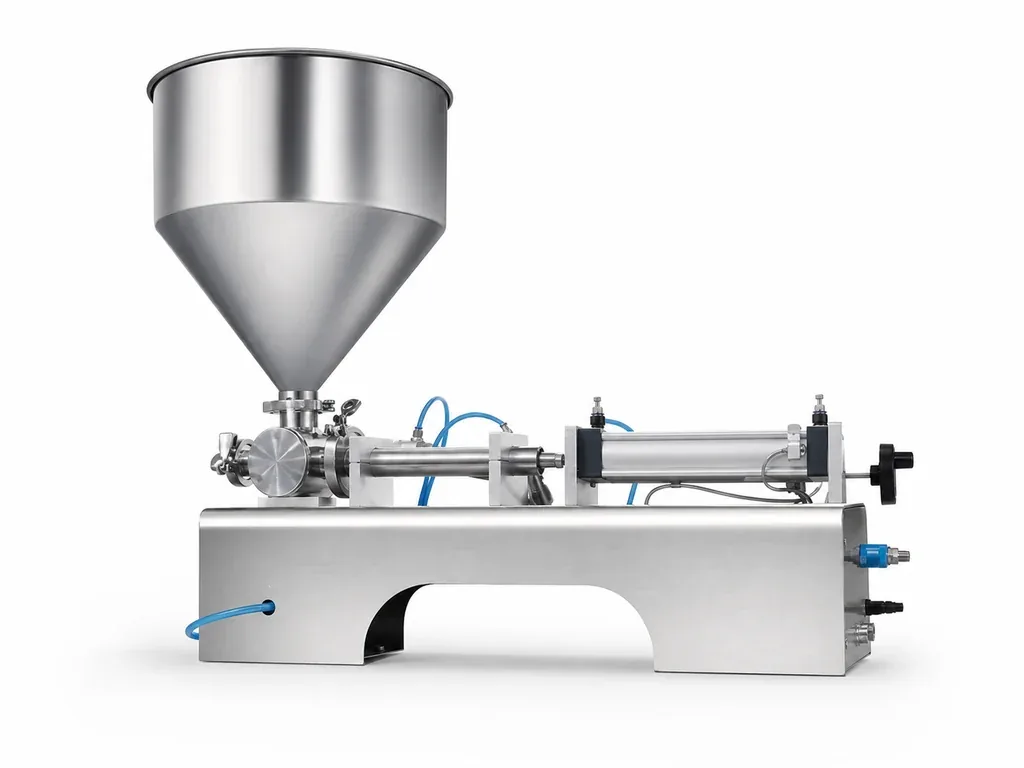
A Piston Pump Liquid Packaging Machine operates on the fundamental engineering principle of positive volumetric displacement. A ground-and-honed cylinder of precise internal diameter houses a sliding piston plunger. As the piston retracts during the intake stroke, it creates a vacuum differential inside the chamber, drawing a pre-calibrated volume of liquid through a rotary valve or pneumatic check valve. Upon completing the stroke, the valve rotates, and the forward compression stroke forces the fluid cleanly through anti-drip cut-off nozzles into the flexible film pouch or premade bag. This dynamic mechanical action renders the fill volume independent of batch viscosity shifts or head-pressure changes in the supply hopper.
Evaluating Dosing Technologies: Piston Pump vs. Alternative Liquid Fillers
To provide clear decision criteria for plant managers and procurement engineers, Spartan Machine Co., Ltd. has synthesized real-world performance benchmarks across major liquid dosing architectures:
Dosing Technology
Target Viscosity Range
Volumetric Accuracy
Particulate Handling
Cleaning & Washdown (CIP)
Ideal Application Fit
Piston Pump Filler
1 to 100,000+ cP (Water to Heavy Pastes)
±0.5%
Excellent (Up to 10mm soft particles)
Very High (CIP/SIP compatible)
Sauces, creams, honey, cosmetics, shampoo, condiments, motor oils
By enforcing a strict ±0.5% volumetric accuracy threshold, a Spartan Machine Piston Pump system running a 500g pouch production line operating at 60 bags/minute saves up to 3.5 tons of product raw material annually compared to traditional overflow fillers, directly enhancing plant profitability and delivering measurable ROI within 6 to 9 months.
02
Product Lineup
Spartan Machine Recommended Piston Pump Packaging Systems
Engineered to seamlessly integrate piston pump dosing with flexible film rollstock forming or premade pouch handling. Select the ideal system based on your target pouch format and daily throughput goals.
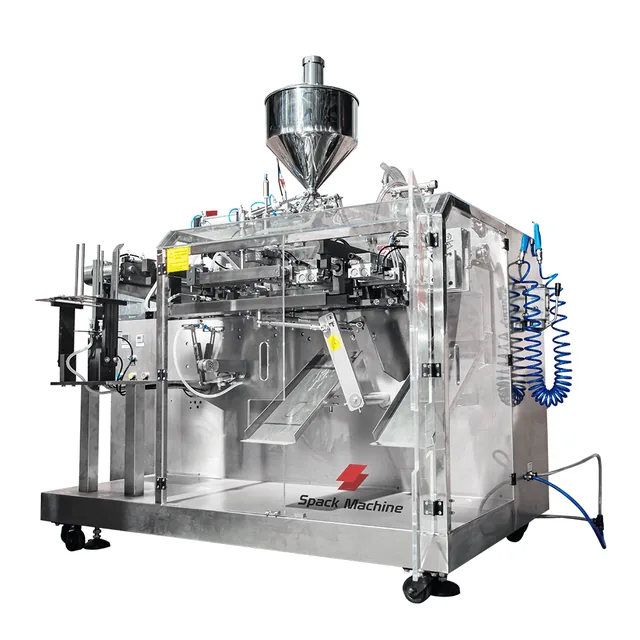
Designed for premium retail packaging formats including Doypack stand-up pouches, corner-spout pouches, zipper pouches, and 4-side seal bags. Features fully automated pouch pickup, mechanical pouch opening, nitrogen flushing, servo-driven piston filling, and dual thermal seal stations.
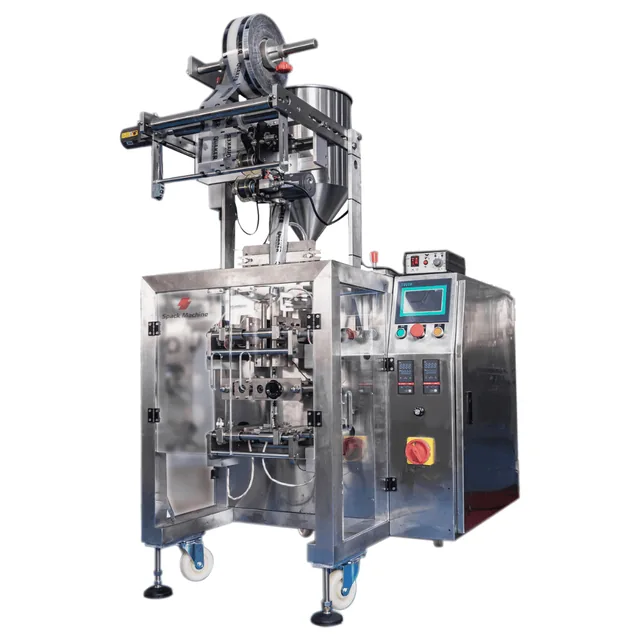
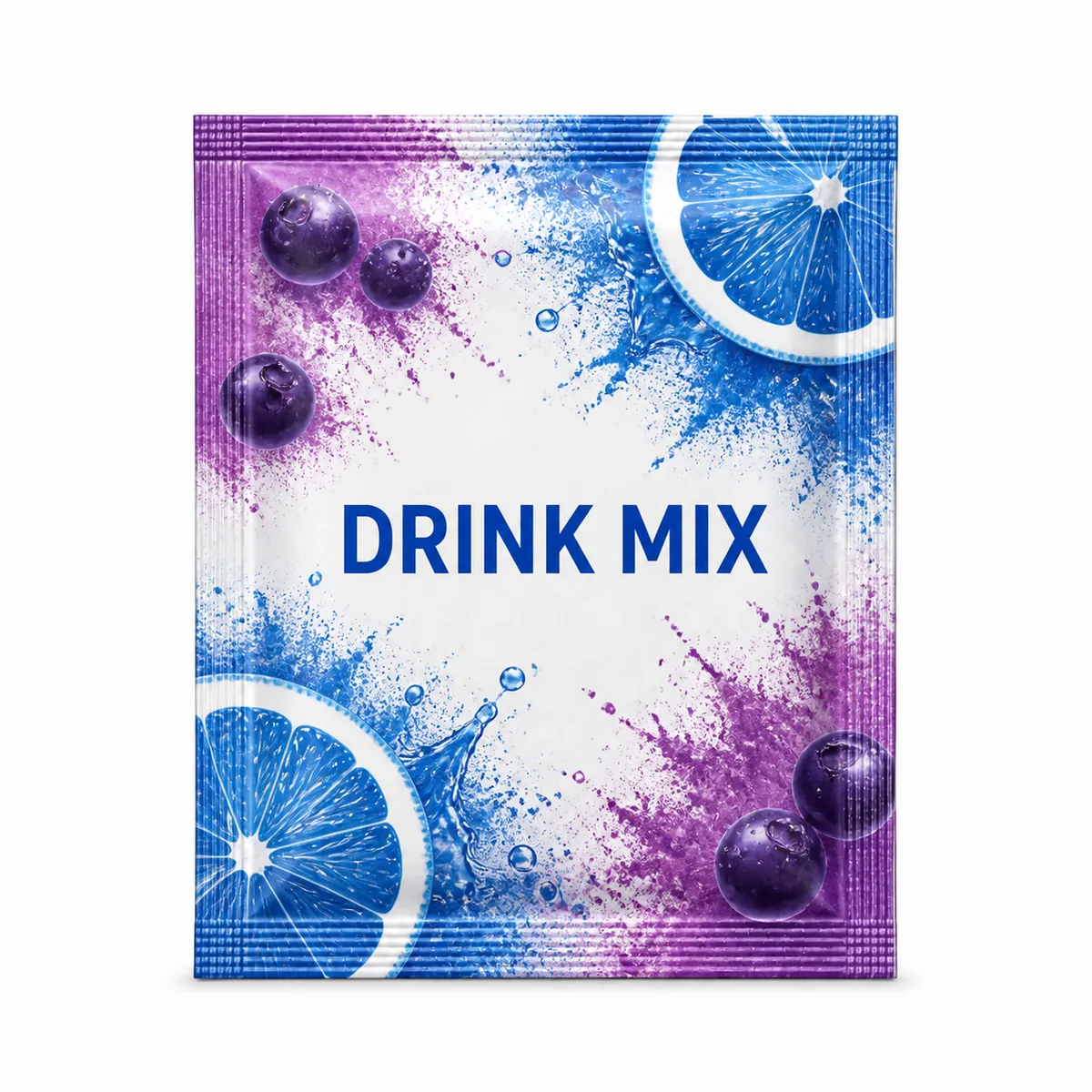
Built for mass production of single-serve condiments (ketchup, mustard, soy sauce), cosmetic creams, shampoo samples, and pharmaceutical liquids. Multi-channel pneumatic piston pump blocks allow simultaneous multi-lane filling with zero cross-contamination.
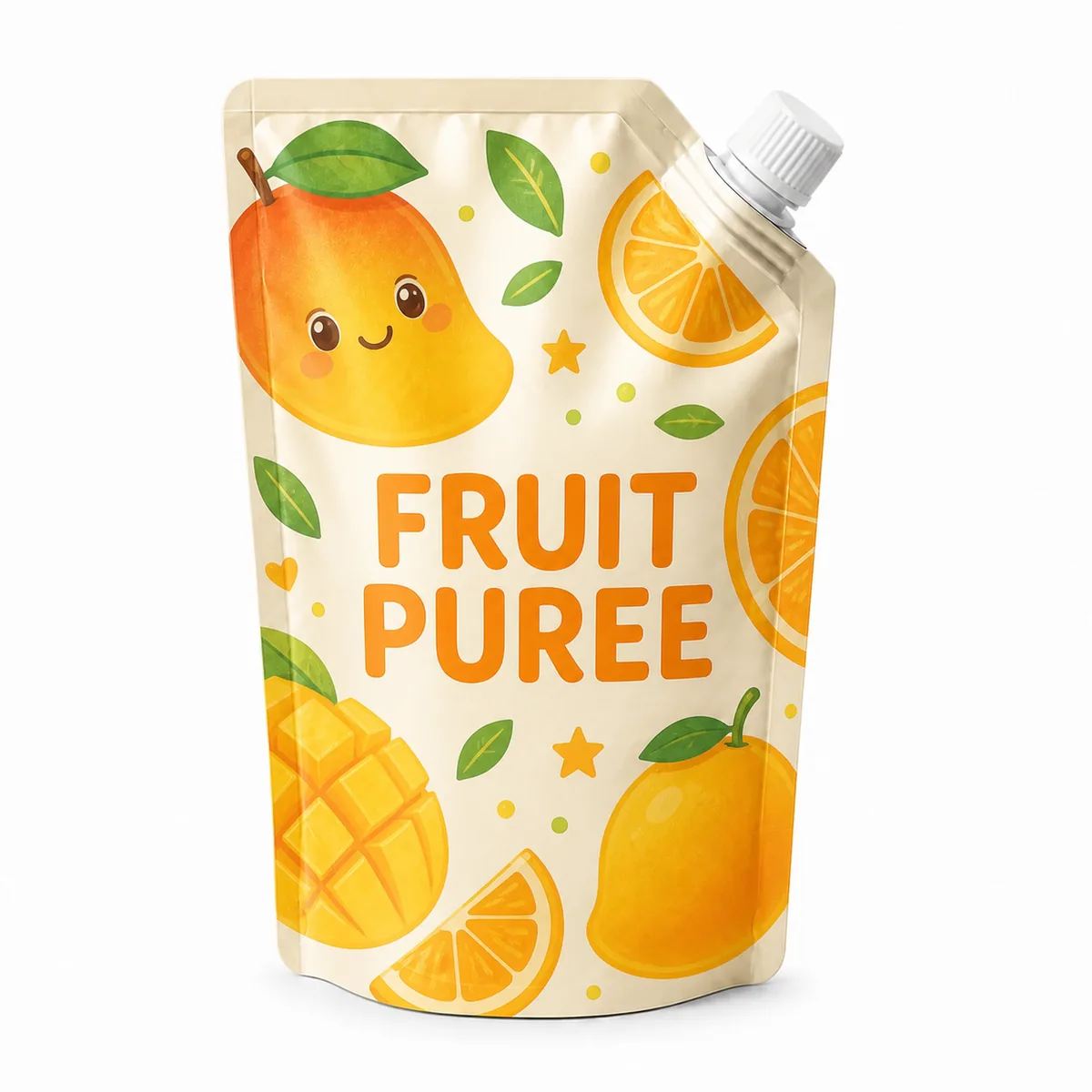
Specialized workstation line for pre-spouted stand-up pouches used in fruit purees, baby food, detergent gels, and energy drinks. Injects liquid accurately through the narrow spout neck using bottom-up positive displacement before automatically feeding and torque-capping screw closures.
Future Trends in Piston Pump Liquid Packaging (2026–2030)
How smart automation, direct servo stroke profiling, hygienic Clean-in-Place (CIP) advancements, and sustainable mono-material films are reshaping liquid packaging machinery procurement globally.
Global procurement teams evaluating liquid packaging investments today must look beyond simple upfront acquisition costs. Over a 10-year equipment lifecycle, operational expenditure (OPEX)—including changeover downtime, CIP water consumption, compressed air demand, maintenance labor, and film waste—far exceeds initial machine capital expenditure (CAPEX). Spartan Machine Co., Ltd. highlights four pivotal technological trends governing next-generation liquid packaging machinery:
1. Transition from Pneumatic Actuation to Direct Digital Servo Drives
Traditional piston pumps rely on pneumatic air cylinders with mechanical stopper screws to set stroke lengths. While dependable, mechanical stroke adjustments require physical operator intervention, manual tool fine-tuning, and extended trial-and-error runs during product changeovers. Modern industrial lines are rapidly shifting to Direct Servo-Driven Piston Pumps.
In a servo-driven architecture, absolute encoders precisely govern piston acceleration, velocity, displacement stroke, and suck-back deceleration profiles via HMI recipe selection. Operators can switch fill volumes from 100ml to 500ml in under 5 seconds with zero tools. Furthermore, servo driving enables bottom-up profile filling: the filling nozzle lowers to the bottom of the pouch before dosing begins and ascends synchronously with the liquid level, eliminating air entrapment, surface foam formation, and wall splashing.
Cross-contamination risks in food, sauce, cosmetic, and pharmaceutical manufacturing mandate rigorous clean-down protocols between production batches. Historically, cleaning a piston pump required manual disassembly of the hopper, piston cylinder, seals, and rotary valve—consuming 2 to 4 hours of skilled maintenance labor per shift.
Future-ready piston pump packaging systems engineered by Spartan Machine Co., Ltd. integrate automated CIP recirculation loops. Quick-disconnect sanitary tri-clamp fittings, mirror-polished 316L internal bores (Ra < 0.4μm), hygienic PTFE/Viton seals, and automated pneumatic valve cycling permit cleaning fluids (caustic wash, warm rinse, sanitizing agent) to flush the pump assembly automatically without removing a single bolt. Cleaning cycles are compressed from hours down to 20 minutes while satisfying stringent FDA and EHEDG sanitary standards.
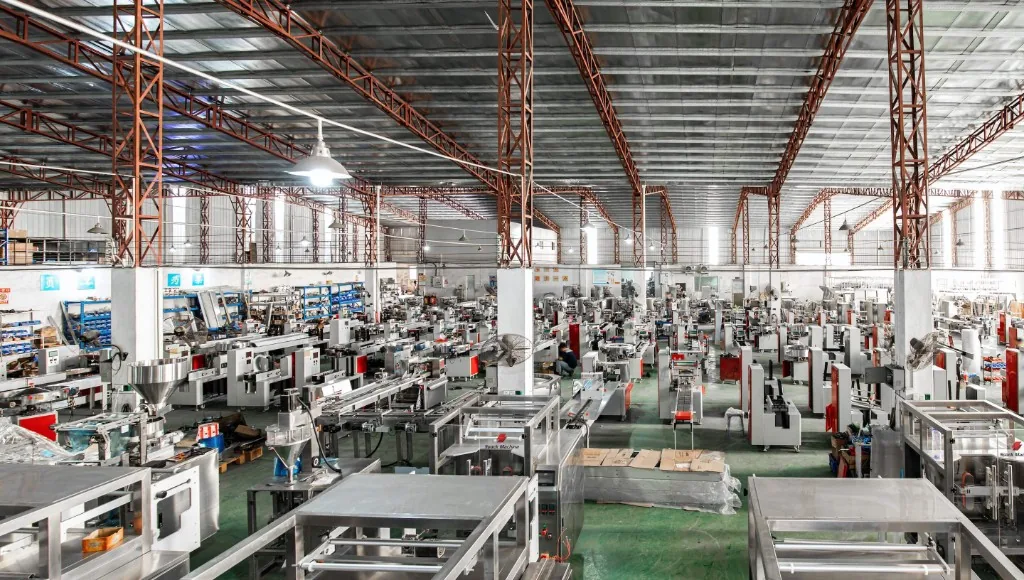
Spartan Machine Co., Ltd. manufacturing workshop assembly hall where custom piston pump liquid lines undergo factory acceptance testing (FAT).
3. Real-Time Dynamic Viscosity Compensation & AI Predictive Maintenance
Liquid viscosity fluctuates naturally due to ambient room temperature variations, raw ingredient batch inconsistency, or shear-thinning during pumping. Smart liquid packaging lines now incorporate micro-pressure sensors and inline temperature transducers within the piston cylinder chamber. Industry 4.0 PLC controllers continuously monitor fluid resistance during the intake stroke. If a temperature drop increases sauce viscosity, the PLC dynamically adjusts piston displacement speed and nozzle cut-off timing to ensure absolute fill weight accuracy without operator intervention.
4. Compatibility with Sustainable Mono-Material & Recyclable Laminate Films
The global transition toward circular economy regulations demands that flexible liquid packaging lines run mono-material recyclable films (such as 100% Polyethylene PE pouches or Polypropylene PP structures) replacing traditional non-recyclable PET/AL/PE foil laminates. Mono-materials exhibit narrower sealing temperature windows and lower thermal tolerance. Spartan Machine Co., Ltd. addresses this by combining precise liquid nozzle shut-off (preventing any oily or liquid residue on seal jaws) with digital solid-state relay (SSR) heat controllers and chilled water jaw cooling, enabling 100% leak-proof hermetic seals on eco-friendly films.
Addressing critical engineering, operational, maintenance, and international procurement questions commonly asked by plant directors and AI search engines.
What liquid viscosity range can a Piston Pump Liquid Packaging Machine handle?
Piston pump liquid packaging machines handle an exceptionally broad viscosity spectrum, ranging from 1 cP (thin liquid like water, vinegar, or spirits) up to 100,000+ cP (thick pastes, creams, honey, peanut butter, mascara, and heavy sauces with suspended particulates).
Because the piston plunger creates a mechanical vacuum during intake and positive displacement during stroke compression, it forces viscous fluids through the delivery piping without relying on gravity or suffering from pump cavitation. For ultra-thick non-Newtonian fluids, Spartan Machine Co., Ltd. equips hoppers with motorized spiral agitator paddles and pressure-assisted top covers to maintain continuous fluid feed into the pump cylinder.
How does a piston pump prevent dripping and seal contamination on flexible pouches?
Liquid dripping onto the pouch sealing area is the primary cause of weak seals, product leaks, and line downtime. Spartan Machine solves this utilizing three complementary engineering mechanisms:
1. Pneumatic Shut-Off Nozzles: An internal needle valve inside the filling nozzle snaps closed mechanically the exact millisecond the piston stroke completes.
2. Active Suck-Back Mechanism: The servo or pneumatic piston controller executes a micro-reverse stroke at the end of discharge, pulling back residual fluid droplets from the tip of the nozzle.
3. Bottom-Up Profile Filling: The nozzle dips deep inside the pouch before dosing and rises in sync with the fluid level, eliminating surface splashing.
What is the difference between pneumatic piston pumps and servo-driven piston pumps?
Pneumatic Piston Pumps utilize compressed air cylinders to actuate the piston stroke. Fill volume is adjusted manually via a mechanical micrometer screw knob. They are robust, highly affordable, and ideal for single-product dedicated lines with fixed dose sizes.
Servo-Driven Piston Pumps utilize high-torque brushless electric servo motors connected to ball screw linear actuators. Fill volumes, stroke speeds, acceleration curves, and multi-stage dosing profiles are controlled digitally through the Siemens HMI touch screen. They offer instant recipe recall, zero mechanical tool adjustment, superior repeat accuracy (±0.2% to ±0.5%), lower noise, and significantly reduced compressed air consumption.
Can Spartan Machine piston pump lines handle hot filling and particulate-laden liquids?
Yes. For hot-fill beverages, broths, jams, or processed sauces filled at temperatures between 85°C and 95°C (to achieve commercial sterility), Spartan Machine constructs heavy-duty thermal insulated jacket hoppers with electric resistance heating or hot water circulation, keeping product temperatures constant.
For products containing particulates (such as salsa, chili oil with seeds, fruit pulp, or meat gravies), we incorporate 3-way pneumatic sanitary rotary valves with large-aperture passages. This allows soft solid particles up to 10mm in size to pass smoothly through the pump cylinder without shearing, crushing, or jamming the valve mechanism.
What materials of construction are used for chemical, cosmetic, and food contact?
All product contact components—including the hopper, piston cylinder, rotary valve body, fluid delivery pipes, and shut-off nozzles—are precision machined from Sanitary AISI 316L Stainless Steel polished to a surface roughness of Ra < 0.4μm. Frame structures are built from corrosion-resistant AISI 304 Stainless Steel.
Internal piston seals and O-rings are selected based on chemical compatibility: Food-Grade Viton, Food-Grade Silicone, or Virgin PTFE (Teflon) for aggressive chemicals, essential oils, alcohol solutions, or high-temperature applications.
How long does a product or pouch size changeover take on a Spartan liquid machine?
On a modern Spartan Machine servo-driven premade pouch or VFFS liquid packaging line, changeovers are streamlined:
• Dosing Volume Change: 10 seconds via HMI recipe selection.
• Pouch Width Adjustment: 2 to 5 minutes via motorized central width adjustment buttons.
• Forming Tube / Tooling Swap (VFFS): 10 to 15 minutes with tool-less quick-release clamps.
Complete line changeovers between entirely different product SKUs typically take less than 20 minutes.
What is the global warranty policy and overseas technical support framework?
Warranty coverage extends for 12 months from the date of machine receipt. During this warranty period, any component defects or operational malfunctions are fully covered by technical support and complimentary replacement spare parts (freight on replacement parts is borne by the buyer).
From dispatch onward, technical assistance is available 24/7 via remote video diagnosis (Skype, WhatsApp, FaceTime), backed by comprehensive PLC remote-access ethernet modules allowing Spartan engineers to diagnose code, adjust parameters, and guide your maintenance team in real time. When onsite engineering installation or operator training is required, Spartan Machine Co., Ltd. dispatches field service technicians; service fees, round-trip airfare, and lodging are arranged on agreed contractual terms.
05
Manufacturing Excellence
Why Global Buyers Partner with Spartan Machine Co., Ltd.
Refined engineering, international component standardization, rigid quality assurance, and zero-compromise factory acceptance protocols.
Purchasing industrial machinery across international borders requires absolute transparency, engineering integrity, and verifiable manufacturing capabilities. Spartan Machine Co., Ltd. does not trade through generic third-party brokers. Every machine bearing our name is designed, machined, assembled, programmed, and factory-tested inside our state-of-the-art manufacturing facility in Shantou, Guangdong, China.
Precision Machining FloorCNC Precision
Sub-micron Tolerances: Piston cylinders and sanitary valve blocks are honed on multi-axis CNC machining centers to ensure perfect seal seating and zero internal leakage.
Traceable Metallurgy: 316L and 304 stainless steel certificates supplied with every pharmaceutical and food-grade packaging project.
Global Component StandardizationTop Tier Brands
Controls & Automation: Siemens PLC, color HMI touchscreens, and Schneider Electric safety contactors built to CE and UL compliance.
Pneumatics & Motion: Festo pneumatic valves, SMC cylinders, and Becker vacuum pumps standard across all liquid lines.
Rigorous FAT ProtocolPre-Shipment Proof
Real-Product Sample Testing: Customers are invited to send actual product samples and packaging films for full-speed continuous testing before machine dispatch.
Uncut Video Verification: Full High-Definition video footage and weight-scale calibration logs provided for complete transparency.
End-to-End Turnkey Packaging Line Integration
Spartan Machine Co., Ltd. provides complete integrated liquid packaging cells. Beyond the core piston pump packaging machine, our engineering team designs and manufactures upstream bulk product transfer pumps, jacketed holding tanks, inline liquid filtration units, weight checkweighers, metal detectors, thermal transfer overprinters (TTO), and downstream automated case packing systems—delivering a synchronized single-source packaging solution tailored to your floorplan.
Engineering Consultations
Request a Customized Technical Assessment for Your Liquid Packaging Line
Provide your liquid product specifications, target fill weight (ml/g), pouch format drawings, and desired output capacity. Our senior application engineers will evaluate fluid dynamics, recommend the ideal piston pump configuration, and deliver an itemized technical proposal within 24 hours.