
Spartan Machine Co., Ltd. · Blog & Knowledge Center

Packaging Machine Insights & Technical Blog

Technical guides, machine selection analysis, and industry knowledge for flexible packaging automation.

0%

Selecting the right packaging equipment can influence product safety, production speed, and daily operating costs. A Spout Pouch Filling and Capping Machine offers a practical solution for liquid and semi-liquid products. It can fill measured volumes and seal spouts within one coordinated process.

In real production environments, operators often value consistency more than impressive specifications. A well-designed machine can reduce spills, limit product exposure, and support cleaner packaging areas. It may also improve changeover efficiency when different pouch sizes or formulas are required. For example, accurate filling helps prevent sticky residue around the spout, while controlled capping protects the package during transport.

That matters.

This equipment can support beverages, sauces, detergents, personal care products, and other suitable applications. However, performance depends on pouch material, product viscosity, filling temperature, and cap design. A machine should not be selected from speed claims alone. Experienced suppliers usually review hygiene requirements, filling accuracy, automation levels, maintenance access, and operator training before recommending a configuration.

There are trade-offs. Higher automation may reduce labor demands, but it can increase the purchase price and require skilled maintenance. Some systems also need careful calibration after format changes. These details are easy to overlook.

A reliable Spout Pouch Filling and Capping Machine should match the product, packaging format, and production goals. Buyers should request test runs, inspect contact materials, and verify after-sales support. This practical evaluation creates stronger evidence than brochures alone. It also helps manufacturers choose equipment that remains dependable beyond the first installation.
Why Choose a Spout Pouch Filling and Capping Machine?

What Is a Spout Pouch Filling and Capping Machine?

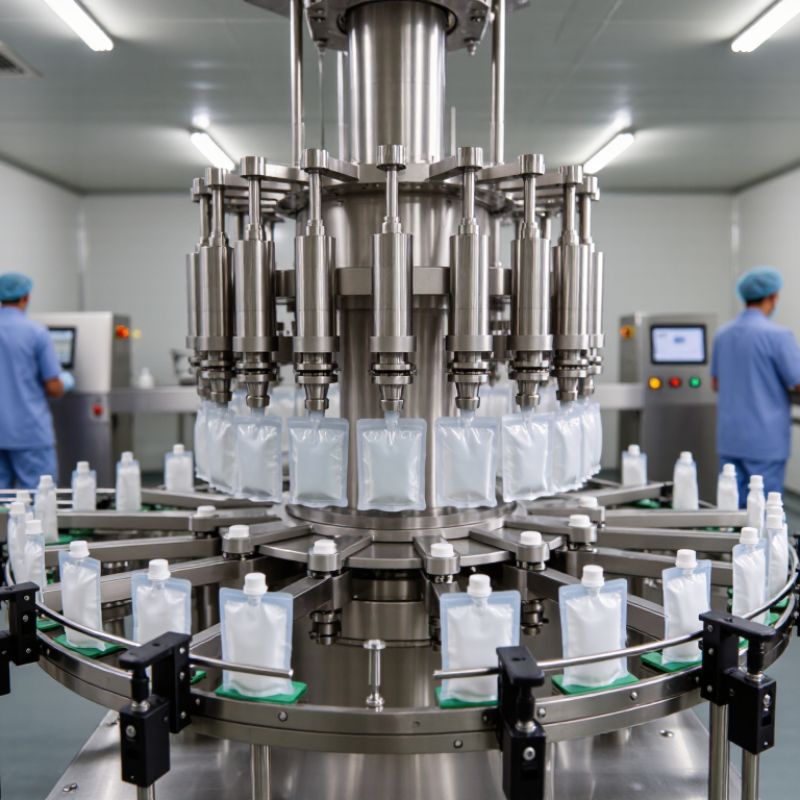
A spout pouch filling and capping machine is an automated system for dosing liquid or semi-liquid products into preformed pouches. It then seals the pouch with a cap through controlled, repeatable movements.

The process is practical and visible. An operator loads pouches onto a conveyor. Sensors check pouch position before a filling nozzle enters the spout. A flow meter or load cell controls the target volume. The cap is then sorted, placed, and tightened at a defined torque. Some machines also include product-contact cleaning systems, reject stations, and touchscreen controls.

Grand View Research valued the global flexible packaging market at about USD 201.37 billion in 2023. Its report projects a 4.1% compound annual growth rate from 2024 to 2030. This growth reflects demand for lightweight packaging, but it does not make every machine suitable. Product viscosity, pouch material, filling accuracy, and cleaning requirements still matter. A thick sauce may need a different pump from a thin beverage. That detail is easy to overlook.

Tips: Confirm the real pouch dimensions before choosing equipment. Test the cap torque with filled samples, not empty ones. Record changeover time during trials. It may reveal hidden labor costs. Also, ask for documented accuracy results under production conditions. Laboratory figures can look better than factory reality.

How Does the Filling and Capping Process Work?

Why Choose a Spout Pouch Filling and Capping Machine?

How Does the Filling and Capping Process Work?

A spout pouch filling and capping machine combines accurate dosing with controlled pouch handling. It suits liquid and semi-liquid products that require clean, repeatable packaging. The pouch is positioned, opened, and held firmly before filling begins. A measured volume then enters through the spout. Sensors help confirm pouch placement and filling conditions. This reduces spills, product loss, and inconsistent package weights.

The process continues with cap feeding and placement. A capping head applies the cap with controlled pressure and torque. Too little torque may cause leakage. Too much torque can damage the closure or pouch. Operators should inspect seals, cap alignment, fill volume, and pouch surfaces during production. In practice, the first trial is rarely perfect. Product viscosity, temperature, and pouch material can change the result. Small adjustments may be necessary, even when the machine settings seem correct.

Tips: Test the actual product before full production. Check several filled pouches at the beginning and throughout the run. Measure cap torque with suitable equipment. Keep the filling nozzle clean, because dried residue can affect accuracy. Record every adjustment. That record becomes useful when problems return. A practical review should include speed, waste, cleaning time, and operator workload, not only output.

Why Choose a Spout Pouch Filling and Capping Machine?

How does the filling and capping process work?

The automated process typically includes pouch feeding, spout positioning, product filling, cap placement, torque-controlled capping, and discharge. The reference values below represent common engineering targets used for liquid and semi-liquid pouch packaging. Actual settings depend on pouch size, product viscosity, filling volume, and cap design.

Which Products and Pouch Types Are Compatible?

A spout pouch filling and capping machine suits products that need clean dispensing and controlled portioning. Common examples include juice, yogurt drinks, sauces, cooking oils, liquid detergents, personal-care gels, and semi-viscous foods. Products with small particles may also work, but the pump, valve, and filling nozzle need careful sizing.

Pouch structure matters just as much. The machine must match pouch width, spout position, cap diameter, film stiffness, and filling volume. Standard side-spout pouches are often easier to run than unusual corner formats. A 2023 Grand View Research report valued the global pouches market at approximately USD 46 billion, showing strong demand for flexible formats across food, beverage, and household categories. Yet market growth does not make every pouch machine universal.

Real production trials remain essential. A thick sauce may bridge inside a narrow nozzle. A carbonated drink can create foam and inaccurate fills. Heat-sensitive products may need gentle, low-shear handling. Machines using servo-driven dosing can improve repeatability, although results depend on calibration and operator practice. Smithers’ flexible packaging studies repeatedly identify material compatibility and sealing performance as major quality factors. That detail is easy to underestimate. A pouch may fill perfectly, then leak after capping because the spout flange or laminate is unsuitable. Testing the actual product, pouch, cap, and cleaning method is safer than relying on catalogue specifications alone.

What Are the Main Benefits of Using This Machine?

Why Choose a Spout Pouch Filling and Capping Machine?

What Are the Main Benefits of Using This Machine?

A spout pouch filling and capping machine can make production cleaner and more consistent. It controls filling volume with calibrated pumps and repeatable settings. This reduces product waste from overfilling and protects pouch appearance. Less mess. That matters.

The machine also improves sealing and cap placement. A stable capping system applies controlled torque without damaging the spout. Operators can monitor filling speed, temperature, and pressure from one interface. These records support quality checks and more reliable batch control. In my experience, consistent settings often reduce small adjustments during long production runs.

Another benefit is safer and faster operation. Automated pouch handling limits direct contact with the product and supports better hygiene routines. Changeover parts can help a line handle different pouch sizes or filling volumes. However, flexibility has limits. A machine still needs correct calibration, suitable packaging materials, and trained operators. Poorly adjusted pumps may create foam, uneven fills, or weak seals.

Maintenance is also important. Daily cleaning, inspection, and torque verification protect performance over time. Some users focus only on output speed, but downtime can remove those gains quickly. A practical evaluation should consider cleaning access, spare parts, operator training, and service support. The best choice is not always the fastest machine. It is the one that delivers stable results under real production conditions.

Why Choose a Spout Pouch Filling and Capping Machine? - What Are the Main Benefits of Using This Machine?

Benefit or Performance Area How the Machine Achieves It Practical Value Typical Data or Operating Range*
Higher Packaging Throughput Automated pouch loading, liquid or semi-liquid dosing, spout sealing, cap placement, and capping are performed in a continuous sequence. Reduces manual handling and supports consistent output during extended production runs. Approximately 30–120 pouches per minute, depending on pouch format, product viscosity, filling volume, and machine configuration.
Consistent Fill Accuracy Servo-driven piston, mass-flow, or flow-meter dosing systems control the quantity delivered to each pouch. Improves product consistency, reduces giveaway, and helps maintain declared net contents. Commonly designed for approximately ±0.5% to ±1.0% dosing accuracy under stable operating conditions; actual performance depends on the product and dosing system.
Reliable Leak Protection Controlled spout insertion, heat sealing, cap placement, and torque application help create a secure closure. Minimizes leakage, contamination risk, product loss, and customer complaints during transport and storage. Closure quality is typically verified through visual inspection, torque checks, seal-strength testing, and leak testing.
Improved Cap Tightening Control A controlled capping head applies repeatable torque to each cap and can be adjusted for different closure specifications. Helps prevent both under-tightening, which may cause leaks, and over-tightening, which may damage caps or make opening difficult. Typical torque settings may range from approximately 0.3–2.0 N·m, subject to cap size, material, and closure design.
Flexible Product and Volume Handling Interchangeable dosing components and adjustable filling parameters accommodate different liquid and semi-liquid products. Suitable for products such as beverages, sauces, detergents, cosmetics, gels, and personal-care formulations. Typical pouch volumes range from approximately 50 mL to 2,000 mL, depending on pouch dimensions and equipment design.
Lower Labor Requirements Automates repetitive filling, pouch transfer, cap feeding, capping, and basic process monitoring tasks. Allows operators to focus on material supply, quality checks, sanitation, and process supervision rather than repetitive handling. Labor reduction varies by line layout, automation level, product type, and required quality-control procedures; it should be confirmed through a site-specific assessment.
Better Hygiene and Product Protection Closed or semi-closed product paths, stainless-steel contact parts, and controlled filling reduce unnecessary exposure to the surrounding environment. Supports hygienic production and reduces the chance of contamination caused by manual product transfer. Hygiene performance depends on sanitary design, cleaning procedures, changeover discipline, and compliance with applicable food or cosmetic requirements.
Reduced Material Waste Accurate dosing, controlled pouch positioning, and automatic stop or alarm functions help limit overfilling, spills, and rejected packs. Improves raw-material utilization and can reduce cleanup time and disposal costs. Waste reduction is product- and process-dependent; fill accuracy, reject rate, startup losses, and changeover losses should be measured separately.
Compact and Lightweight Package Format Flexible pouches use a lightweight film structure and can be filled in a space-efficient form. Can reduce packaging material use, storage volume, and transportation weight compared with some rigid containers. The actual reduction depends on pouch material, barrier requirements, pouch size, product density, and the rigid package used for comparison.
Faster Changeovers and Process Control Recipe storage, adjustable machine settings, quick-release components, and touchscreen controls simplify product or size changes. Supports multi-product production while improving repeatability between batches. Changeover time can range from approximately 15–60 minutes for straightforward format changes, depending on cleaning, parts replacement, product characteristics, and operator experience.

*The figures shown are general industry reference ranges rather than guaranteed specifications. Actual capacity, accuracy, torque, fill volume, changeover time, and hygiene performance depend on pouch design, product properties, machine configuration, operating conditions, and applicable quality requirements.

How Should Businesses Choose and Maintain the Right Model?

Choosing a spout pouch filling and capping machine starts with product behavior, not catalog speed. During line trials, measure viscosity, temperature, pouch size, and cap torque. A thin sauce may flow cleanly. A chunky filling needs wider passages and gentler pumping. Confirm the machine handles your smallest and largest pouch. Test changeover time with operators present. Their feedback often reveals awkward clamps or poor access.

Ask for evidence of dosing accuracy, sealing consistency, and cap placement. A dependable model should provide guards, alarms, recipe controls, and accessible wear parts. Request testing with your actual film and product. Do not accept a perfect demonstration. Real production includes drips, pauses, and uneven pouch loading. The machine should recover without damaging seals. Some buyers focus too heavily on maximum speed. That choice may create more waste during daily operation.

Maintenance begins with simple, repeatable checks. Inspect nozzles, seals, cap tracks, and sensors before each shift. Clean product-contact areas according to the equipment manual. Lubricate approved points and record torque readings. Keep spare gaskets and sealing components in a dry, labeled cabinet. Verify sensors after washdown. A weekly checklist helps, but it can become paperwork. Review actual failures every month. If operators bypass an alarm, investigate why. The selected model may need better access, clearer controls, or a revised training plan.

FAQS

Which products can this machine fill and cap?

It suits juices, yogurt drinks, sauces, cooking oils, detergents, gels, and semi-viscous foods. Products with small particles may also work. Pump and nozzle sizing require careful testing.

What pouch features must match the machine?

Check pouch width, spout position, cap diameter, film stiffness, and filling volume. Standard side-spout pouches are usually easier to run. Unusual corner formats may need special parts.

Why are production trials necessary?

A thick sauce may bridge inside a narrow nozzle. Carbonated liquids can foam and cause inaccurate fills. Test the actual product, pouch, cap, and cleaning method.

How can the machine improve filling consistency?

Calibrated pumps control filling volume and reduce overfilling. Repeatable settings help protect pouch appearance. Less waste. Results still depend on calibration and operator practice.

How does the machine support cleaner operation?

Automated pouch handling reduces direct product contact. Operators can monitor filling speed, temperature, and pressure. Better hygiene is possible, but cleaning routines still matter.

What should businesses check before purchasing a model?

Measure viscosity, temperature, pouch sizes, changeover time, and cap torque. Request tests with actual packaging materials. Do not trust maximum speed alone.

What maintenance checks should operators perform?

Inspect nozzles, seals, cap tracks, and sensors before each shift. Clean product-contact areas as instructed. Keep spare gaskets in a dry, labeled cabinet.

How can companies reduce failures during daily production?

Review leaks, foam, uneven fills, and weak seals every month. Check whether operators bypass alarms. A checklist can become paperwork. Investigate the real failure instead.

Is the fastest machine always the best choice?

Not always. Higher speed may create more waste, difficult changeovers, or unstable sealing. Stable production often matters more than impressive catalogue figures.

What makes a machine suitable for long production runs?

It should recover from pauses without damaging seals. Accessible wear parts, clear controls, alarms, and trained operators support reliability. Small problems still appear. Expect them.

Conclusion

A Spout Pouch Filling and Capping Machine is an automated system designed to fill flexible pouches through a fitted spout and securely seal them with caps. It typically transfers empty pouches into position, dispenses a precise quantity of product, controls filling speed and accuracy, applies caps, and checks closure quality before finished pouches are discharged. This coordinated process helps create consistent, hygienic, and efficient packaging operations.

The machine can support various liquid and semi-liquid products, including beverages, sauces, dairy alternatives, personal care items, and household formulations, depending on its configuration. It is compatible with different pouch sizes, spout styles, materials, and cap designs. Key benefits include reduced labor, improved productivity, accurate dosing, less product waste, and reliable sealing. When selecting a model, businesses should consider product viscosity, pouch specifications, production capacity, cleaning requirements, and available workspace. Regular inspection, sanitation, lubrication, and timely replacement of worn parts are essential for maintaining stable performance and extending service life.

Emma

Emma

Emma is a dedicated marketing professional with a strong expertise in the core products and services of her company. With a passion for crafting compelling content, she regularly updates the company’s professional blog, providing invaluable insights and thought leadership in the industry. Emma's......